
How to Tell If a Sale Is Real: A Five-Minute Price Check
Ignore the crossed-out number. Compare the exact item, its normal selling price, and the full checkout cost before calling a discount real.
- Desk
- Buying Guides
- Checked
- Aug 6, 2026
- By
- My Deal Junction Buyer Desk
A discount is the difference between today's total price and a price the exact item normally sells for. It is not automatically the difference between two numbers printed on the same product page.
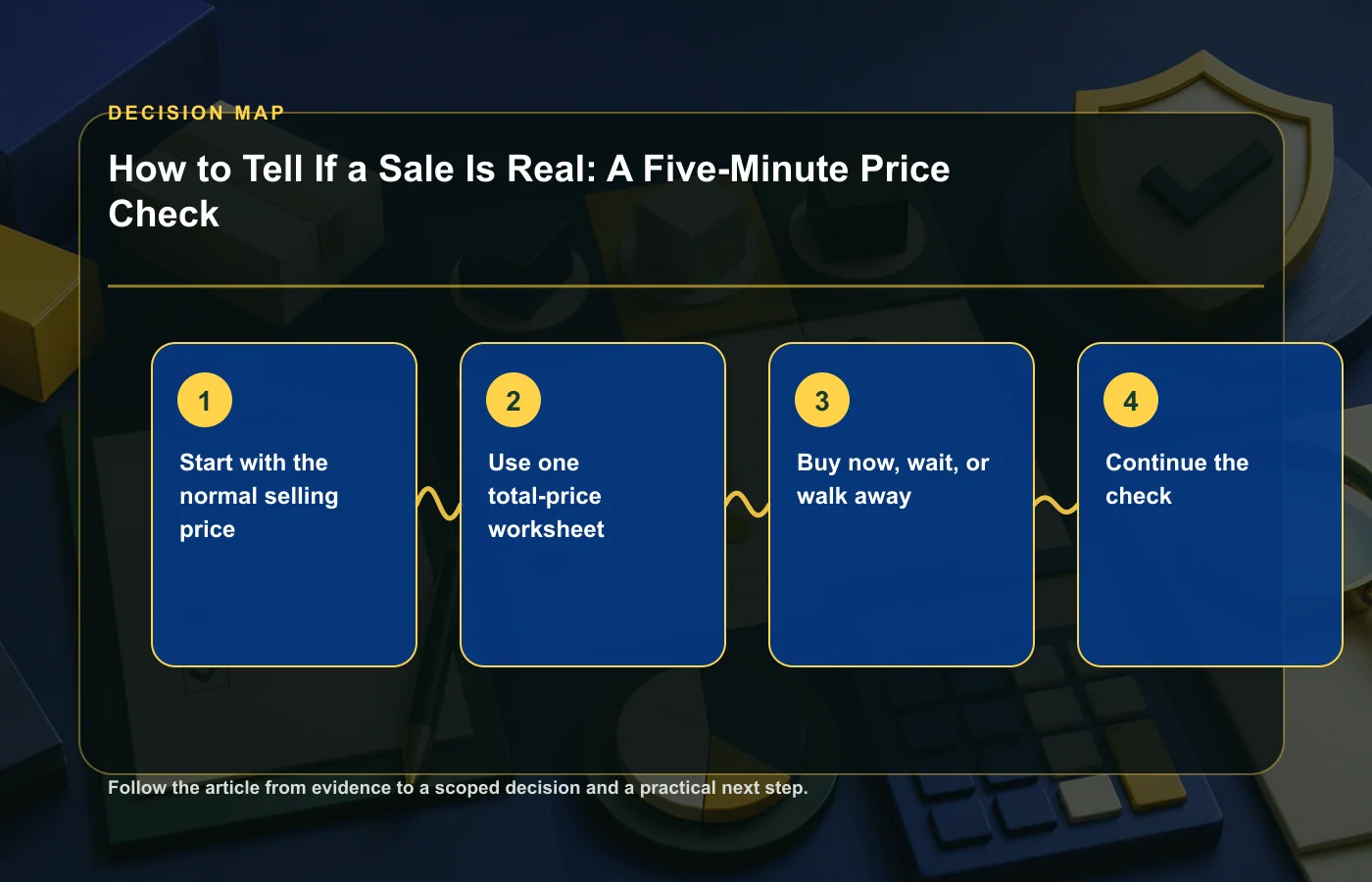
Start with the normal selling price
Copy the manufacturer, full model number, storage or capacity, color, size, and included accessories. Small variations can explain a large price gap. A marketplace listing for last year's model is not a valid comparison for the current one, and a bundle is not directly comparable with a bare product.
Then look for the same configuration at two independent sellers. The FTC recommends comparing model details and the total cost, including shipping and other charges. If most sellers are clustered near the advertised sale price, that price may simply be the market price.
Use one total-price worksheet
| Field | What to write down | Why it changes the verdict |
|---|---|---|
| Exact item | Model, variant, condition, quantity | Prevents false comparisons |
| Reference price | Typical recent price, not only MSRP | Creates a realistic baseline |
| Checkout total | Item + shipping + required fees + tax | Shows what leaves your account |
| Conditions | Coupon, membership, trade-in, financing | Reveals effort and eligibility |
| Exit rights | Return window, fees, refund method | A lower price may carry more risk |
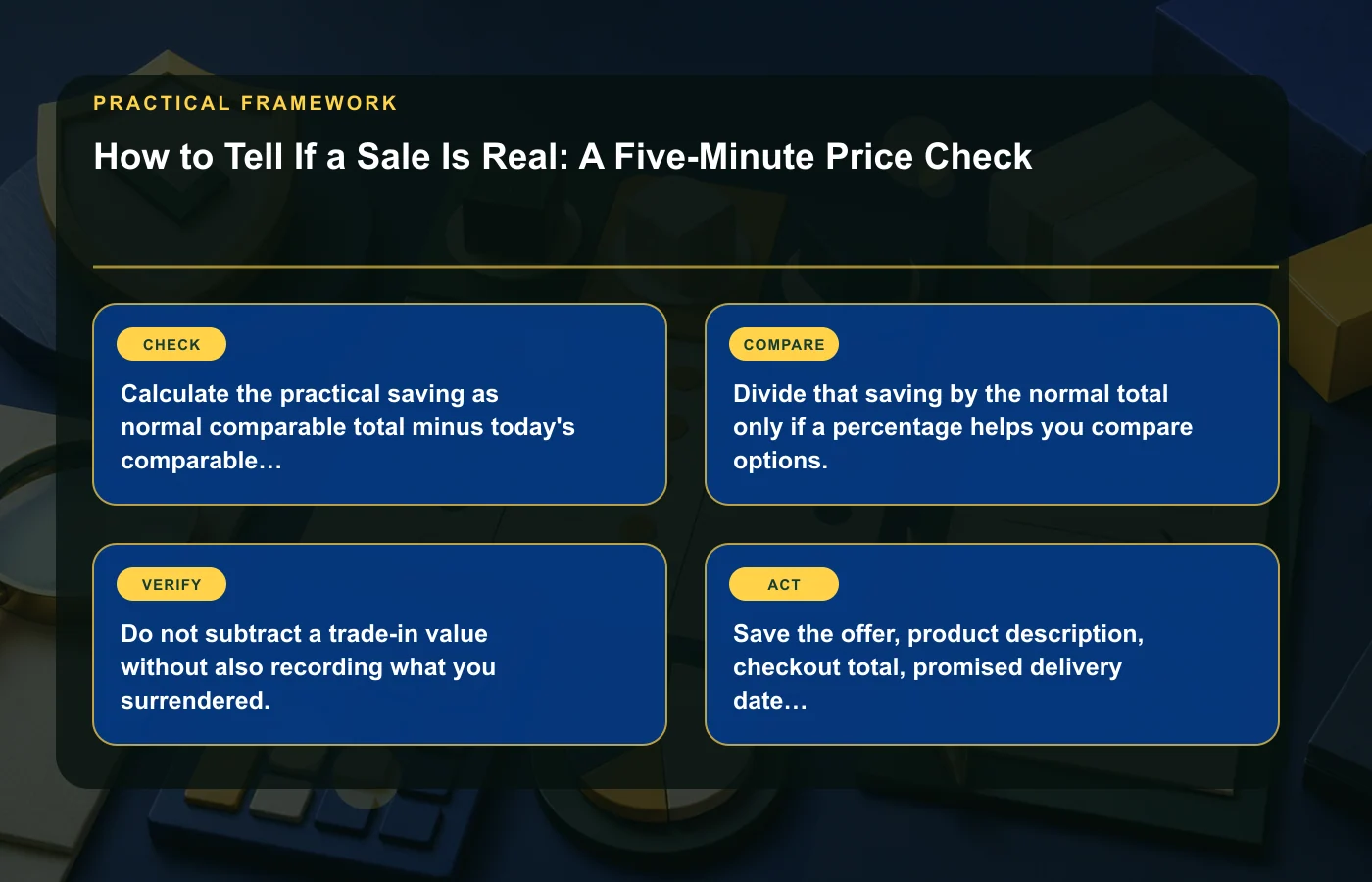
Calculate the practical saving as normal comparable total minus today's comparable total. Divide that saving by the normal total only if a percentage helps you compare options. Do not subtract a trade-in value without also recording what you surrendered.
Buy now, wait, or walk away
- Buy nowThe item was already planned, the total fits your budget, the saving is real, and the seller and return policy pass review.
- WaitThe item is optional, price history shows frequent repeats, or you cannot yet compare the exact configuration.
- Walk awayThe seller identity is vague, the timer pressures you, payment leaves the platform, or the return terms erase the saving.
Continue the check
Use the online shopping safety checklist for an unfamiliar seller and the return policy checklist before accepting a final-sale price.
How this page was prepared
Reviewed by My Deal Junction Standards Editor. Claims, terminology, and time-sensitive details were checked against the sources listed below and the page was last updated August 6, 2026.
AI-assisted tools supported research organization or drafting; editorial review remained responsible for source selection and the published conclusions.
Sources and verification
Primary and authoritative references used to verify this article: