
Outdoor Clothing Buying Guide: Build a Layering System
Choose a base, insulating, and weather layer around your climate and activity. Fit, drying time, repairability, and repeat use matter more than a logo.
- Desk
- Home & Lifestyle
- Checked
- Aug 6, 2026
- By
- My Deal Junction Buyer Desk

Build a system for the weather and effort you actually face. A flexible three-layer setup usually tells you more than a list of fashionable outdoor brands.
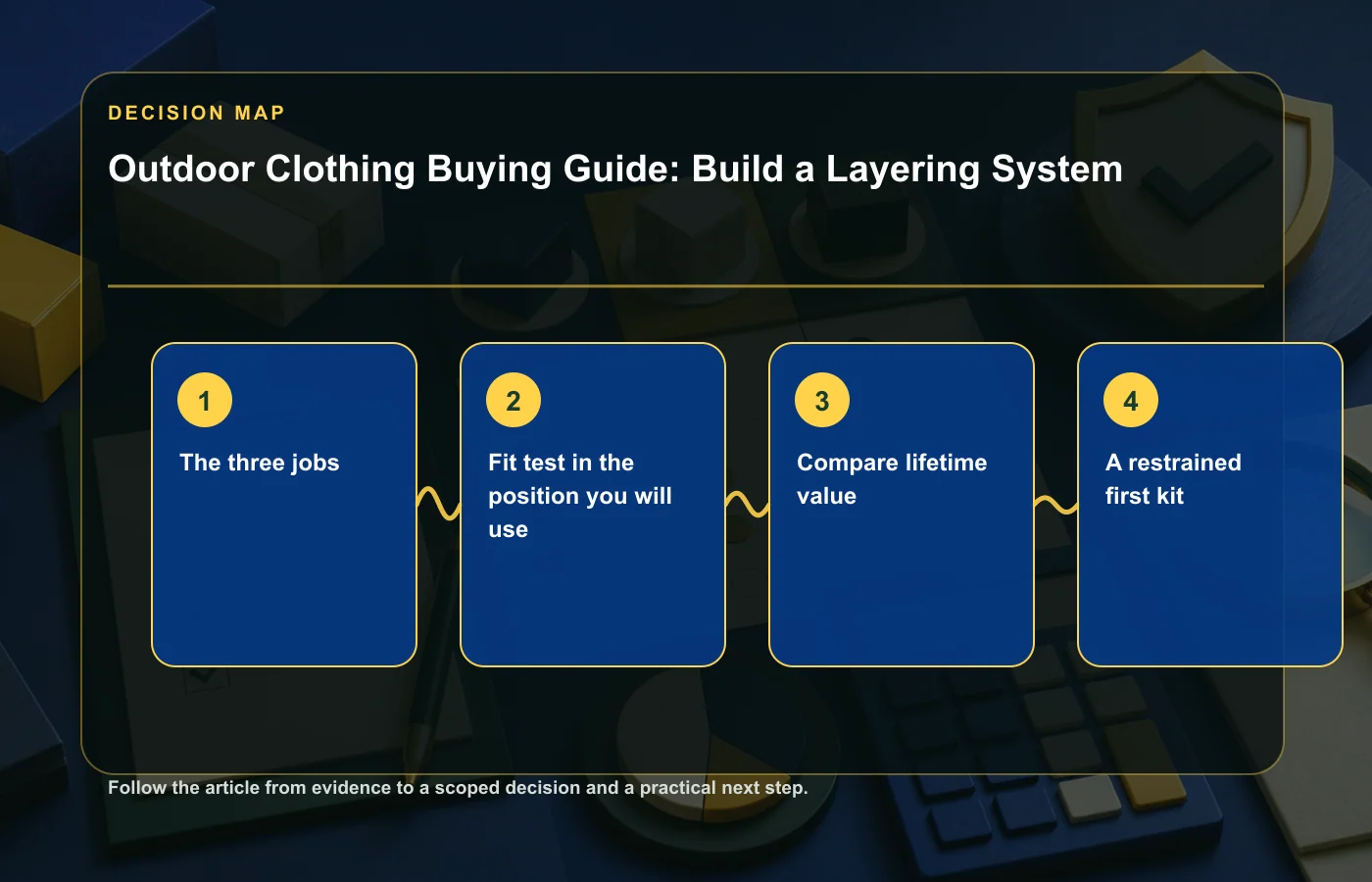
The three jobs
A single garment may handle two jobs in mild conditions. That is useful when it still gives you enough control to cool down before sweat accumulates and to add warmth when activity stops.
Fit test in the position you will use
- Wear the planned layers.A shell fitted over a T-shirt may bind over insulation.
- Reach, squat, and rotate.Hem lift, knee restriction, and cuff gaps appear during movement.
- Add the pack or harness.Pockets and zippers should remain reachable; seams should not sit under pressure points.
- Test ventilation.Open vents and front zips with gloves if cold-weather use is expected.
- Check exposed areas.Hood, collar, cuffs, waist, and trouser overlap determine practical coverage.
Compare lifetime value
| Field | Question | Evidence to seek |
|---|---|---|
| Durability | Where will abrasion occur? | Fabric and reinforcement matched to use |
| Care | Can you wash and dry it as required? | Clear label and realistic routine |
| Repair | Can zippers, tears, snaps, or panels be fixed? | Repair service, parts, or simple construction |
| Versatility | How many planned activities use it? | Actual outfit and trip list |
| Return fit | Can it be tried with layers? | Written condition and return window |
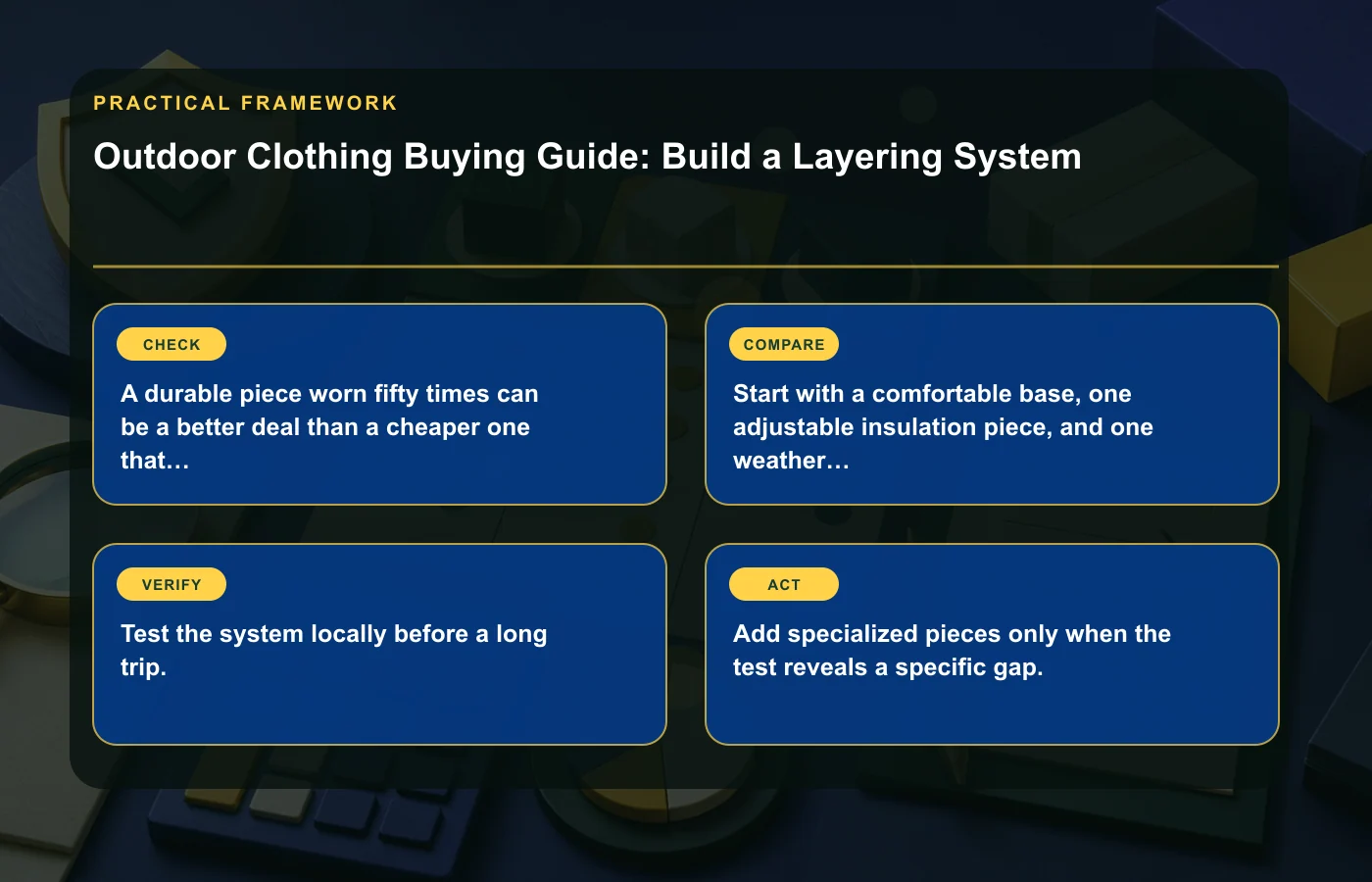
Estimate cost per expected use only after the item passes the function and fit tests. A durable piece worn fifty times can be a better deal than a cheaper one that stays in the closet, but a premium specification has no value when your conditions never use it.
A restrained first kit
Start with a comfortable base, one adjustable insulation piece, and one weather layer appropriate to the most likely conditions. Test the system locally before a long trip. Add specialized pieces only when the test reveals a specific gap.
How this page was prepared
Reviewed by My Deal Junction Standards Editor. Claims, terminology, and time-sensitive details were checked against the sources listed below and the page was last updated August 6, 2026.
AI-assisted tools supported research organization or drafting; editorial review remained responsible for source selection and the published conclusions.
Sources and verification
Primary and authoritative references used to verify this article: