
Refurbished vs. Open-Box vs. Used: What to Verify
Condition labels vary by seller. Compare the inspection process, missing parts, battery condition, warranty, and return rights instead of trusting the label.
- Desk
- Buying Guides
- Checked
- Aug 6, 2026
- By
- My Deal Junction Buyer Desk
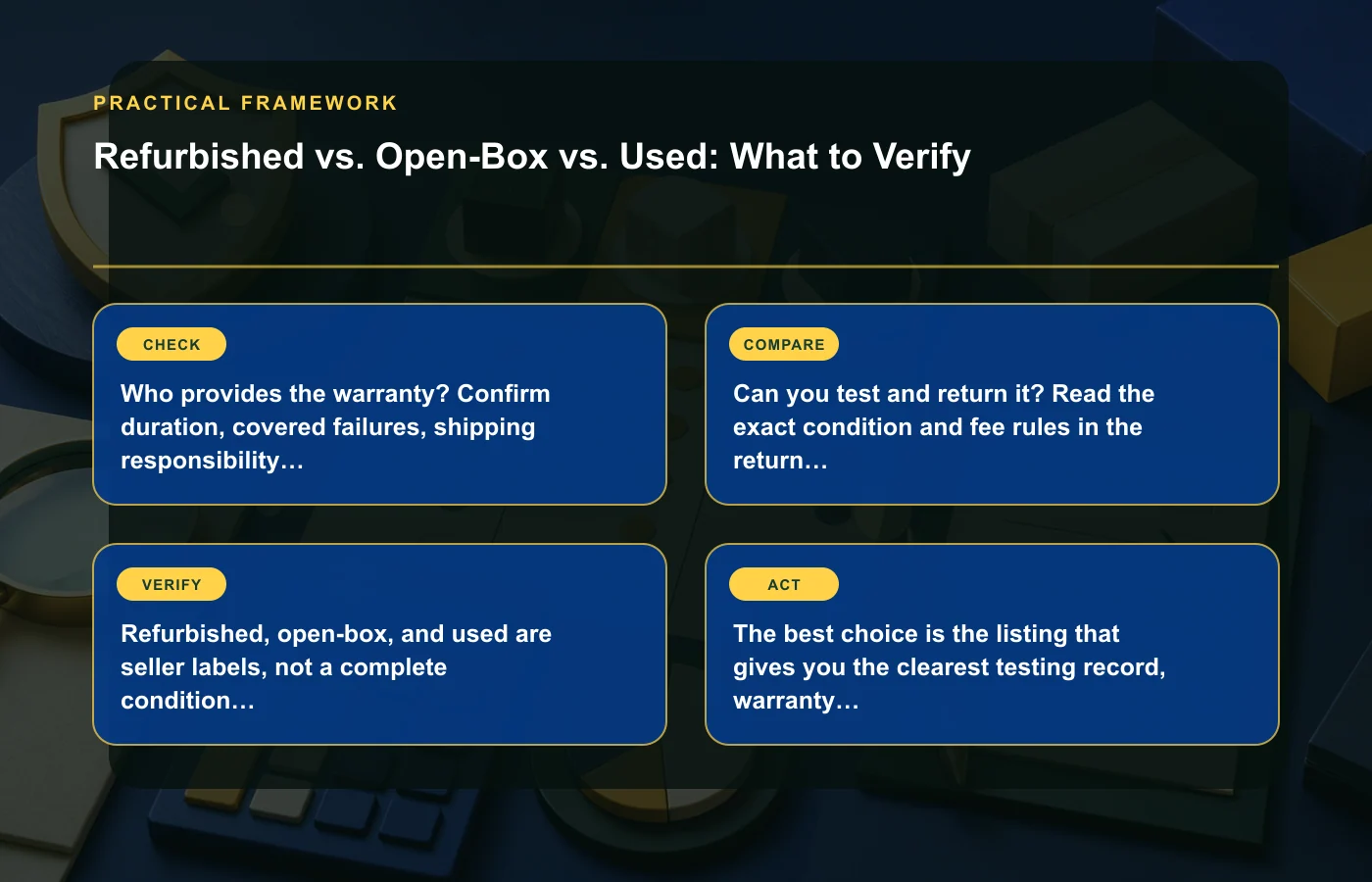
Refurbished, open-box, and used are seller labels, not a complete condition report. The best choice is the listing that gives you the clearest testing record, warranty, accessories, and exit rights for the price.
| Label | Often suggests | Do not assume |
|---|---|---|
| Refurbished | Inspected, repaired, cleaned, or reset through a stated process | New battery, original parts, cosmetic perfection, or manufacturer involvement |
| Open-box | Packaging was opened or the item was returned | It was never used, all accessories remain, or testing was comprehensive |
| Used | A previous owner used the item | Known service history, remaining warranty, or consistent grading |
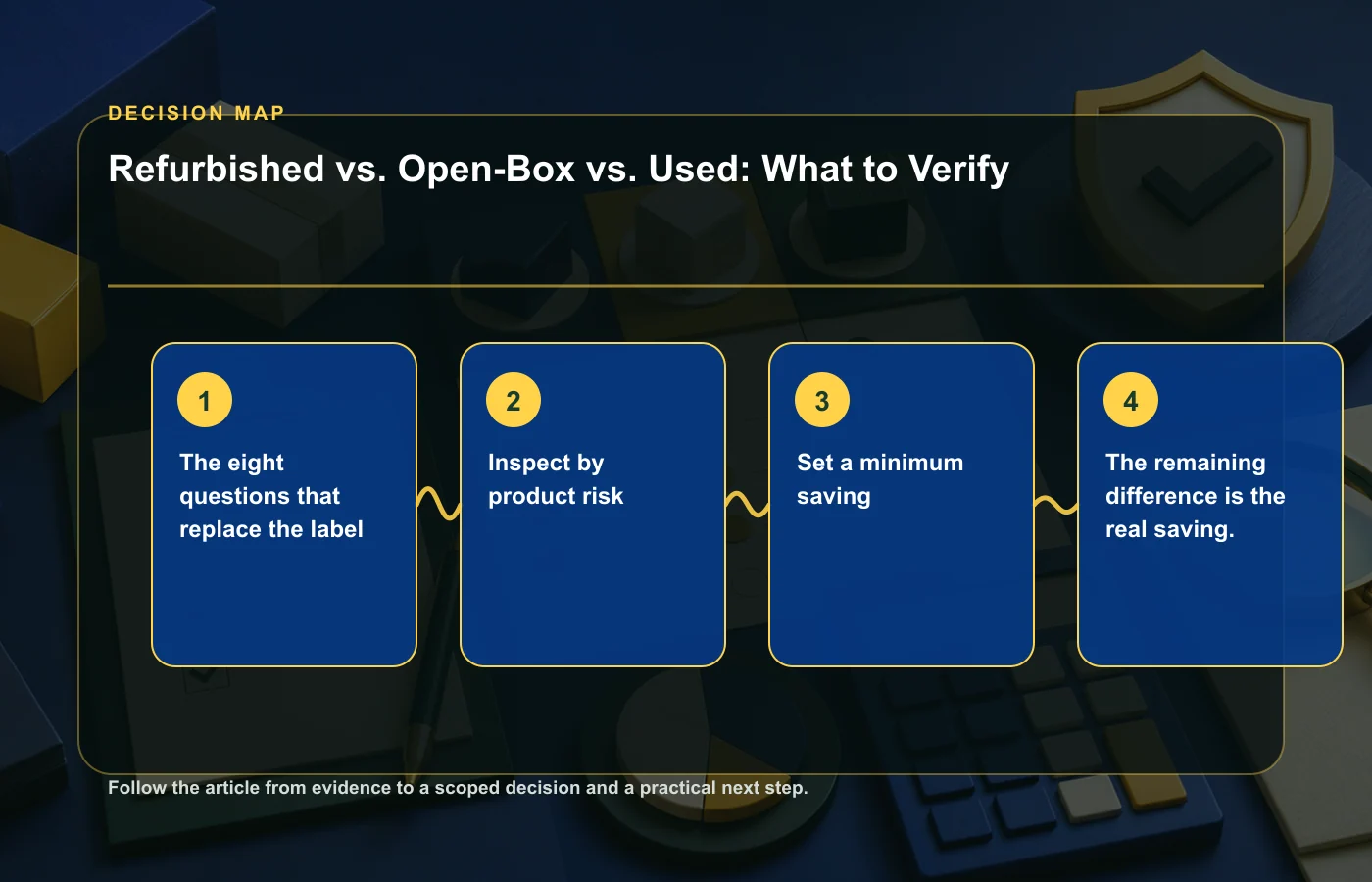
The eight questions that replace the label
- Who inspected it?Manufacturer, authorized refurbisher, retailer, marketplace seller, or individual?
- What was tested?Ask for a function list, not merely "works."
- What was replaced?Record parts, part origin, and whether seals or water resistance were restored.
- What cosmetic grade means here?Look for the seller's own definition and photos of the actual item when possible.
- Which accessories are included?Missing chargers, mounts, trays, or licenses change the usable price.
- What is the battery condition?Ask for a measurable threshold or cycle count where the product exposes one.
- Who provides the warranty?Confirm duration, covered failures, shipping responsibility, and service location.
- Can you test and return it?Read the exact condition and fee rules in the return checklist.
Inspect by product risk
Set a minimum saving
Start from the best realistic new-item total, then subtract the value of a shorter warranty, missing parts, uncertain battery life, cosmetic wear, and return friction. The remaining difference is the real saving. For a small discount, new may offer better value even when the used label price is lower.
How this page was prepared
Reviewed by My Deal Junction Standards Editor. Claims, terminology, and time-sensitive details were checked against the sources listed below and the page was last updated August 6, 2026.
AI-assisted tools supported research organization or drafting; editorial review remained responsible for source selection and the published conclusions.
Sources and verification
Primary and authoritative references used to verify this article: