
Fall Capsule Wardrobe: A Purchase Plan, Not a Trend List
Inventory what you own, define repeatable outfit formulas, and buy only the missing pieces that fit your weather, care routine, and weekly life.
- Desk
- Home & Lifestyle
- Checked
- Aug 6, 2026
- By
- My Deal Junction Buyer Desk
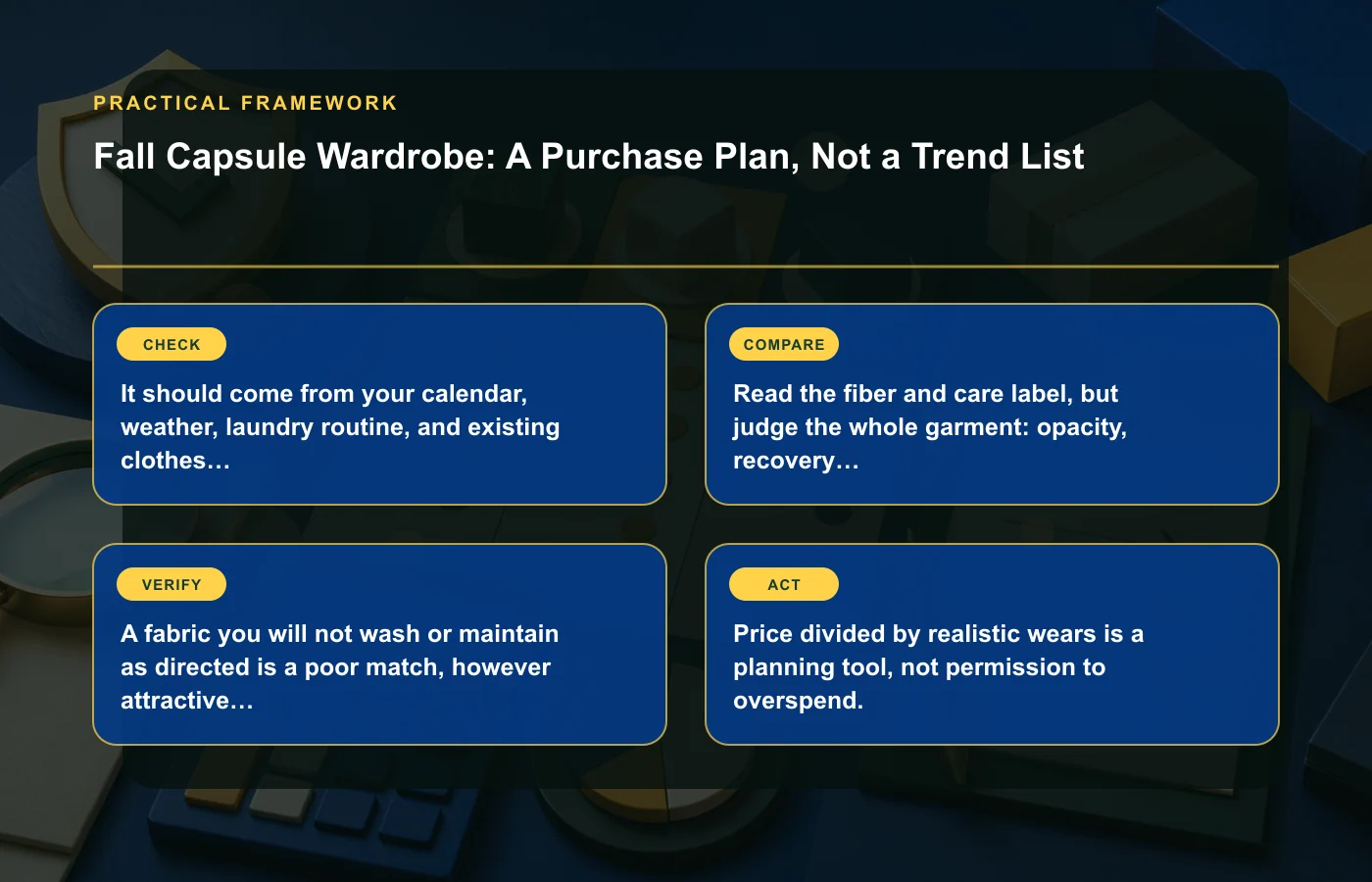
A capsule wardrobe is a limit that makes getting dressed easier. It should come from your calendar, weather, laundry routine, and existing clothes rather than a prescribed item count.
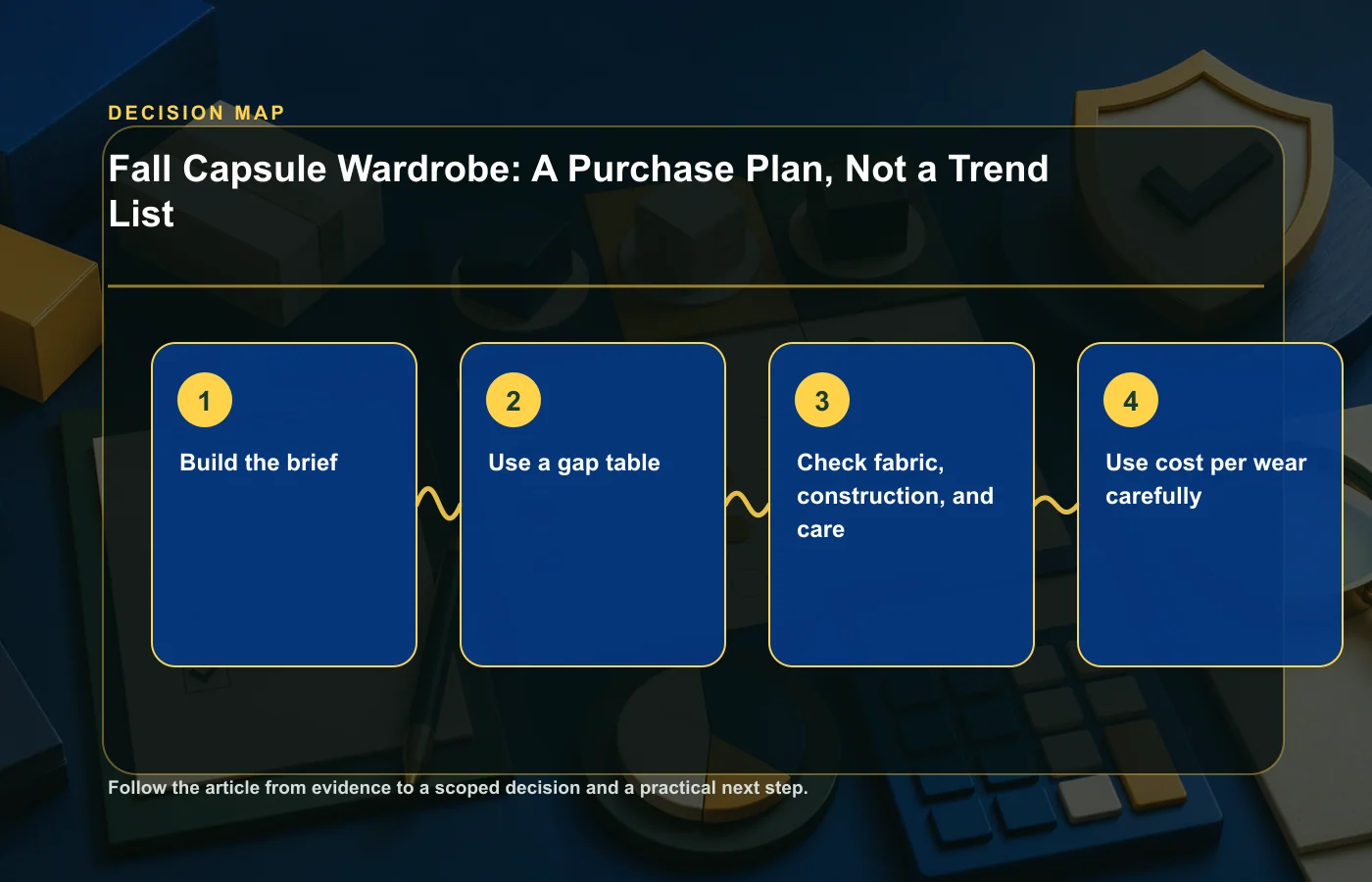
Build the brief
- Map a normal week.Count work, home, exercise, social, travel, and weather-specific outfits.
- Audit what fits now.Set aside repair, alteration, seasonal storage, and genuine gaps.
- Choose outfit formulas.Examples: trouser + knit + coat; dress + layer + boot; denim + shirt + weather shell.
- Set a working palette.Use colors already represented in shoes, outerwear, and frequently worn pieces. Brown can be a base, accent, or texture, not a requirement.
- Write the purchase list.Each item must complete at least three planned outfits or solve one frequent weather problem.
Use a gap table
| Gap | Requirement | Proof before buying |
|---|---|---|
| Warm layer | Works indoors and under outerwear | Fits two existing bottoms and planned coat |
| Weather shoe | Handles commute surface and rain | Comfort test, care plan, return window |
| Outer layer | Covers the real temperature and rain range | Movement test over normal layers |
| Work bottom | Supports sitting, walking, and laundering | Three complete outfits using owned tops |
| Accent | Adds variety without a new outfit system | Pairs with both main neutrals |
Check fabric, construction, and care
Read the fiber and care label, but judge the whole garment: opacity, recovery after stretching, seam finish, closures, lining, pocket stress, pattern alignment, and spare hem. A fabric you will not wash or maintain as directed is a poor match, however attractive it looks in the store.
Use cost per wear carefully
Price divided by realistic wears is a planning tool, not permission to overspend. Estimate one season conservatively and include alteration, cleaning, and repair. If the item duplicates something you already avoid, projected wears should be low.
Pause trend purchases
Save the item and build three outfits from clothes you own. Wait at least one normal week unless it fills an urgent, documented gap. Then apply the sale-price check and return-policy checklist.
How this page was prepared
Reviewed by My Deal Junction Standards Editor. Claims, terminology, and time-sensitive details were checked against the sources listed below and the page was last updated August 6, 2026.
AI-assisted tools supported research organization or drafting; editorial review remained responsible for source selection and the published conclusions.
Sources and verification
Primary and authoritative references used to verify this article: